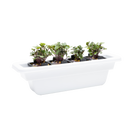
There is nothing quite like pulling a loaf of hydroponic herb compound butter roasted garlic bread from the oven — golden, fragrant, and loaded with herbs you grew yourself, just steps from your kitchen. This recipe brings together a homemade compound butter infused with fresh rosemary, thyme, chives, and parsley alongside deeply roasted garlic, all spread generously over a crusty baguette. The secret weapon? Every herb in this recipe can be harvested from your own indoor hydroponic garden, which means peak freshness, zero wilting, and flavor that grocery store bundles simply cannot match. If you have been looking for a reason to start growing herbs indoors, this homegrown herb garlic bread is it.
Why Hydroponic Herbs Make the Best Garlic Bread
Flavor starts at the root — literally. Hydroponics is a method of growing plants in a nutrient-rich water solution rather than soil, giving the plant's roots direct access to a precisely balanced diet of macro and micronutrients. Because hydroponic plants are not competing for nutrients in soil and are grown in controlled environments, they tend to grow faster and produce more concentrated essential oils in their leaves. Those essential oils are exactly what give fresh herbs their punchy, aromatic flavor.
A 2021 study published in the journal Agronomy found that hydroponically grown basil contained up to 30% higher concentrations of volatile aromatic compounds compared to soil-grown counterparts under the same lighting conditions. More aromatic compounds means more flavor per leaf — and that is exactly what you want in a compound butter destined for a roasted garlic bread recipe.
NASA's Veggie project, which has been testing hydroponic plant growth aboard the International Space Station since 2014, found that fresh herbs grown hydroponically in controlled conditions maintained consistent nutrient density and flavor profiles across multiple harvests — a finding that translates directly to your countertop garden at home.
When you snip rosemary from a Personal Garden sitting on your kitchen counter and fold it into softened butter within minutes, you are working with herbs at their absolute flavor peak. That difference shows up on every bite of this indoor garden herb bread recipe.
What Herbs Grow Best for This Homegrown Herb Garlic Bread?
The beauty of this recipe is its flexibility, but a few herbs stand out as all-stars for compound butter destined for roasted garlic bread. Here is what to grow and why each one earns its place in the butter:
- Rosemary: Piney, resinous, and bold. Rosemary holds up beautifully when the bread hits a hot oven, intensifying rather than fading. Use finely minced fresh leaves — about 1.5 teaspoons per stick of butter.
- Thyme: Earthy and slightly floral, thyme layers complexity beneath rosemary's punch. Strip the tiny leaves from the stems and use 1 teaspoon per stick.
- Flat-leaf parsley: Bright, grassy, and slightly peppery, parsley lightens the butter and adds a fresh green color. Use 2 tablespoons, finely chopped.
- Chives: Mild onion flavor without any sharpness. Chives complement the roasted garlic without competing with it. Use 2 tablespoons, thinly sliced.
- Basil (optional): If you want a Mediterranean lean, add 1 tablespoon of thinly sliced fresh basil. Add it raw after baking so the heat does not blacken the leaves.
All five of these herbs thrive hydroponically and are available as pre-seeded seed pods ready to drop into your garden. Most herb pods begin producing harvest-ready leaves within 2 to 3 weeks of germination, so you will not be waiting long.
How to Make Hydroponic Herb Compound Butter Roasted Garlic Bread
This recipe serves 6 to 8 people as a side dish or appetizer. The compound butter can be made up to a week ahead and stored in the refrigerator, or frozen for up to three months — which makes it perfect for batch-cooking when your herb garden is producing abundantly.
Ingredients
- 1 whole head of garlic
- 2 tablespoons olive oil
- 2 sticks (1 cup / 227g) unsalted butter, room temperature
- 1.5 teaspoons fresh rosemary, finely minced (from your hydroponic garden)
- 1 teaspoon fresh thyme leaves (from your hydroponic garden)
- 2 tablespoons fresh flat-leaf parsley, finely chopped (from your hydroponic garden)
- 2 tablespoons fresh chives, thinly sliced (from your hydroponic garden)
- 1 teaspoon flaky sea salt (plus more to taste)
- ¼ teaspoon freshly ground black pepper
- ¼ teaspoon lemon zest (optional, brightens the butter)
- 1 large baguette or sourdough loaf
Step 1 — Roast the Garlic
Preheat your oven to 400°F (205°C). Slice the top quarter off the garlic head to expose the cloves. Place it cut-side up on a small piece of foil, drizzle with olive oil, and wrap it tightly. Roast for 40 to 45 minutes until the cloves are golden, deeply caramelized, and very soft. Let it cool for 10 minutes, then squeeze all the cloves out into a small bowl and mash into a smooth paste with a fork.
Step 2 — Make the Compound Butter
Place the room-temperature butter in a medium bowl. Add the roasted garlic paste, rosemary, thyme, parsley, chives, sea salt, black pepper, and lemon zest if using. Use a spatula or fork to mix everything together until fully combined and evenly distributed. Taste and adjust salt. At this stage you can use it immediately, roll it into a log in plastic wrap and refrigerate, or portion it into an ice cube tray and freeze individual servings.
Step 3 — Build and Bake the Bread
Slice the baguette in half lengthwise. Spread a generous, even layer of compound butter across both cut faces — do not be shy here, a thicker layer means more flavor and a better golden crust. Place both halves butter-side up on a baking sheet. Bake at 375°F (190°C) for 12 to 15 minutes until the edges are golden and the butter is bubbling. For extra color, switch to the broiler for the final 1 to 2 minutes, watching closely. Slice and serve immediately.
Chef's Tips
- Bring butter fully to room temperature before mixing — cold butter will not incorporate the herbs evenly.
- Roast two heads of garlic at once and freeze one paste portion. Roasted garlic is the ingredient most likely to become a bottleneck in this recipe.
- For a pull-apart version, score a whole loaf in a crosshatch pattern without cutting through the bottom, then press compound butter into every cut. Wrap in foil and bake at 375°F for 20 minutes, then open the foil for 5 minutes to crisp up.
How to Grow a Continuous Herb Supply with an Indoor Hydroponic Garden
One of the most common frustrations home cooks face is running out of fresh herbs mid-recipe or watching a store-bought bunch turn slimy in the crisper drawer before it gets used. Growing hydroponically indoors solves both problems at once.
According to the USDA Economic Research Service, Americans throw away an estimated 30 to 40% of their food supply, and fresh herbs are among the most wasted items due to short shelf life after purchase. Growing your own means you harvest only what you need, exactly when you need it, and the plant keeps producing.
A well-maintained hydroponic herb garden can deliver a continuous harvest using a technique called cut-and-come-again: trimming no more than one-third of the plant at a time, which encourages the plant to branch out and produce even more foliage over the following days. With four to six herb pods running simultaneously, you will have more than enough supply to make this indoor garden herb bread recipe weekly and still have herbs left over for pasta, soups, and marinades.
For households that want a serious herb-growing setup without sacrificing kitchen aesthetics, The Rise Loft is a premium indoor garden built with furniture-grade materials that fits beautifully into living rooms, dining rooms, or open kitchens. Its integrated full-spectrum LED lighting system is tuned specifically for leafy greens and herbs, delivering the right spectrum and intensity to maximize essential oil production in rosemary, thyme, and basil.
If counter space is the priority, the Personal Garden is a compact countertop system that holds up to 12 pods and fits neatly beside your coffee maker. It handles full herb rotations easily and keeps your ingredient supply arm's reach from the cutting board.
For larger households or anyone who wants to grow herbs alongside lettuces, cherry tomatoes, and peppers, The Rise Garden 3 is a full-size three-tier system capable of running dozens of pods across multiple plant families at once. Pairing a tier of herbs with a tier of leafy greens means your kitchen is genuinely stocked at all times.
Keeping your hydroponic herbs thriving requires monitoring the electrical conductivity (EC) of your water — a measure of how nutrient-dense the solution is — and the pH level, which should stay between 5.5 and 6.5 for most herbs. Rise Gardens nutrients are formulated specifically for the pH and EC ranges that produce vigorous, flavorful herb growth, so there is no guesswork involved.
Is Hydroponic Herb Bread Actually Healthier Than Store-Bought?
Fresh herbs are not just flavor carriers — they are genuinely nutrient-dense plants. Parsley, for example, is one of the most concentrated sources of vitamin K in the culinary world, with just two tablespoons of fresh parsley delivering over 150% of the daily recommended intake of vitamin K, according to the USDA FoodData Central database. Rosemary contains rosmarinic acid, a potent antioxidant. Thyme delivers thymol, a naturally occurring antimicrobial compound.
When herbs are harvested days before you eat them — as is the case with most grocery store purchases — those nutrient levels degrade. A study from Penn State University found that spinach stored for seven days at room temperature lost up to 47% of its folate content. While that specific study focused on spinach, the mechanism of nutrient degradation applies broadly to leafy greens and herbs: time, heat, and light all reduce nutritional value after harvest.
Hydroponically grown herbs harvested minutes before cooking are as nutritionally intact as any herb can be. The compound butter in this hydroponic herb bread recipe captures that nutrition in a delicious, accessible form. Is garlic bread health food? No — but fresh herbs with documented antioxidant and micronutrient profiles are meaningfully better than the dried, months-old alternatives.
Variations on This Hydroponic Herb Bread Recipe
Once you have the base compound butter technique down, the variations are nearly endless — and your indoor garden gives you the raw ingredients to experiment freely.
- Lemon Basil and Chive: Swap rosemary and thyme for fresh basil and extra chives, add a full teaspoon of lemon zest. Pairs beautifully with seafood dishes.
- Spicy Herb Butter: Add ½ teaspoon of red pepper flakes and 1 tablespoon of finely minced fresh oregano alongside the parsley and chives. Great alongside pasta arrabbiata.
- Herb and Parmesan: Fold ¼ cup of finely grated Parmesan into the compound butter before spreading. The cheese crisps and browns beautifully under the broiler.
- Mint and Dill: For a Middle Eastern-inspired version, replace the woody herbs with fresh dill and mint. Serve alongside grilled lamb or falafel.
All of these herb variations grow reliably in a hydroponic setup. The mint is worth noting specifically: mint grows aggressively in soil and can take over a garden bed, but in a hydroponic pod system it stays contained and manageable — one of the practical advantages of soilless growing for notoriously invasive plants.
Frequently Asked Questions
Can I use dried herbs instead of fresh hydroponic herbs in this recipe?
You can, but the results will be noticeably different. Dried herbs have lost their volatile aromatic oils, which are responsible for the bright, punchy flavor that makes this recipe special. If substituting, use roughly one-third the amount called for — so ½ teaspoon of dried rosemary in place of 1.5 teaspoons fresh. The compound butter will still be good, but it will lack the vibrancy you get from fresh-harvested hydroponic herbs.
How long does hydroponic herb compound butter last?
Wrapped tightly in plastic wrap or stored in an airtight container, compound butter keeps in the refrigerator for up to 7 days. For longer storage, roll it into a log, wrap in plastic, and freeze for up to 3 months. Slice off individual rounds directly from frozen — they thaw quickly on warm bread or in a hot pan.
Which herbs are easiest to grow hydroponically for beginners?
Basil, chives, and parsley are the most beginner-friendly hydroponic herbs because they germinate quickly, grow fast, and tolerate minor fluctuations in pH and nutrients without significant setback. Rosemary and thyme are slightly slower to establish but extremely low-maintenance once they reach a mature size. All five are ideal choices for an indoor garden herb bread recipe like this one.
What bread works best for homegrown herb garlic bread?
A French baguette gives you the ideal ratio of crispy crust to soft interior and is the most traditional choice. Sourdough is an excellent alternative and adds a mild tang that complements the roasted garlic beautifully. Ciabatta works well for the pull-apart variation because its open crumb structure absorbs the compound butter deeply. Avoid pre-sliced sandwich bread — it lacks the structural integrity to hold up to a generous layer of compound butter under broiler heat.