This hydroponic herb compound butter roasted shrimp recipe is exactly what happens when your indoor garden starts pulling its weight in the kitchen. Compound butter — a classic technique where softened butter is blended with fresh herbs, aromatics, and seasonings — transforms roasted shrimp from a simple weeknight protein into something that tastes genuinely special. When those herbs come straight from your own hydroponic setup, harvested minutes before you cook, the flavor difference is measurable, not just poetic. This guide walks you through the full recipe, explains why hydroponically grown herbs perform so well in compound butter, and gives you the setup knowledge to grow every herb in this dish at home.
Why Hydroponic Herb Butter Shrimp Hits Different
Most grocery store herbs are harvested days — sometimes weeks — before they reach your produce drawer. In that window, volatile aromatic compounds called terpenes begin to degrade. A 2019 study from the University of California Davis found that fresh-cut herbs can lose up to 50% of their essential oil content within 24 hours of harvest at room temperature. That's the flavor you're missing when you use store-bought parsley in a butter sauce.
Hydroponically grown herbs, by contrast, are living plants up until the moment you snip them. In a properly maintained indoor hydroponic system, herbs grow in a nutrient-rich water solution — no soil required — where roots have constant, optimized access to water, oxygen, and dissolved minerals. The result is faster growth, higher yield per square foot, and measurably more concentrated flavor. According to research supported by the USDA's Agricultural Research Service, hydroponic basil has demonstrated up to 20% higher levels of certain phenolic compounds compared to soil-grown counterparts under equivalent light conditions.
For this homegrown herb seafood dish, that means every bite of shrimp carries the full aromatic punch of herbs at their peak. Tarragon with its anise-forward bite, chives with their mild onion heat, parsley with its clean brightness — these flavors all land harder when the plant was alive an hour ago.
Which Herbs to Grow for This Indoor Garden Shrimp Recipe
The compound butter in this recipe uses four herbs that are all excellent candidates for hydroponic growing indoors. Here's a quick breakdown of each, including their ideal growing conditions and what they bring to the dish.
- Flat-leaf parsley: A workhorse herb that germinates in 14–21 days hydroponically and provides a clean, slightly peppery base note to the butter. It thrives at a water pH between 5.5 and 6.0.
- Tarragon (French): Best started from cuttings rather than seed. It brings a subtle licorice-anise character that pairs beautifully with butter and seafood. Prefers slightly warmer root temperatures.
- Chives: One of the fastest-growing herbs in a hydroponic system — you can see meaningful growth within 10–14 days from transplant. Their mild allium flavor keeps the butter from tasting too rich.
- Thyme: A slower grower but extremely hardy. Thyme contributes earthy, resinous depth and holds its flavor even after brief heat exposure, making it ideal for a pan sauce or oven finish.
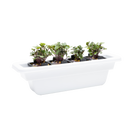
If you're growing with a Personal Garden, you can comfortably maintain two to three of these herbs at once on a countertop with very little maintenance. The built-in LED spectrum is tuned to promote leaf density, which is exactly what you want from culinary herbs. For anyone who wants to keep all four herbs plus extra greens for salads or garnishes, the The Rise Garden 3 gives you the full multi-tier growing space to make that happen year-round.
Hydroponic Herb Compound Butter Roasted Shrimp Recipe (Full Instructions)
Yield: 4 servings | Prep time: 20 minutes | Cook time: 10 minutes | Total time: 30 minutes
For the Compound Butter
- 8 tablespoons (1 stick) unsalted butter, room temperature
- 2 tablespoons fresh flat-leaf parsley, finely minced
- 1 tablespoon fresh chives, thinly sliced
- 1 teaspoon fresh thyme leaves, stripped from stems
- 1 teaspoon fresh tarragon, finely minced
- 2 cloves garlic, minced or pressed
- 1 teaspoon lemon zest
- ½ teaspoon smoked paprika
- ½ teaspoon kosher salt
- ¼ teaspoon freshly cracked black pepper
- Pinch of cayenne (optional)
For the Shrimp
- 1.5 lbs large shrimp (16/20 count), peeled and deveined, tails on
- 1 tablespoon olive oil
- ½ teaspoon kosher salt
- ¼ teaspoon black pepper
- Lemon wedges and additional fresh herbs for serving
Make the Compound Butter
- Add the softened butter to a medium mixing bowl. Using a fork or silicone spatula, work the butter until it's smooth and spreadable — no cold lumps.
- Fold in the minced parsley, chives, thyme, and tarragon. Add garlic, lemon zest, smoked paprika, salt, pepper, and cayenne if using.
- Mix thoroughly until every ingredient is evenly distributed throughout the butter.
- Lay a sheet of plastic wrap on your countertop. Spoon the butter mixture onto the wrap in a rough log shape. Roll the plastic around it, then twist the ends to compress the butter into a tight cylinder approximately 1.5 inches in diameter.
- Refrigerate for at least 15 minutes to firm up. The compound butter can be made up to 5 days in advance and stored in the refrigerator, or frozen for up to 2 months.
Roast the Shrimp
- Preheat your oven to 425°F. Line a large rimmed baking sheet with foil or parchment.
- Pat the shrimp completely dry with paper towels — surface moisture is the enemy of good browning. Toss with olive oil, salt, and pepper.
- Spread the shrimp in a single layer on the prepared baking sheet. Do not crowd them; use two pans if needed.
- Slice 4–6 rounds of the chilled compound butter, each about ¼ inch thick, and place one round on top of each cluster of 4–5 shrimp.
- Roast at 425°F for 7–9 minutes, until shrimp are pink, opaque, and just beginning to curl. The butter will melt and pool around the shrimp, creating a self-basting pan sauce.
- Remove from oven immediately. Shrimp continue cooking off heat, so pull them the moment they look done.
- Transfer to a serving platter, spoon the pan juices over the top, and garnish with fresh herbs and lemon wedges.
Serving suggestions: This hydroponic herb butter shrimp is excellent over crusty sourdough to catch the butter sauce, alongside steamed jasmine rice, or tossed with fresh pasta. A crisp dry white wine — Vermentino, Muscadet, or an unoaked Chardonnay — pairs cleanly with the herb butter without competing.
Does Hydroponic Growing Really Improve Herb Flavor?
This is one of the most common questions from first-time indoor gardeners, and the answer is grounded in real plant science. NASA's Veggie project — a long-running research initiative studying plant growth in controlled environments — confirmed that plants grown under optimized LED light spectra and nutrient delivery systems can produce consistent, high-quality crops with significantly reduced resource use compared to conventional agriculture. The underlying principle applies directly to home hydroponic herb gardens: when a plant has exactly what it needs (the right light spectrum, the right nutrient EC levels, the right pH), it expresses more of its full genetic flavor potential.
Electrical conductivity, or EC, is the measure of dissolved nutrients in your water solution. For most culinary herbs, an EC between 1.6 and 2.2 mS/cm produces optimal growth and flavor concentration. Rise Gardens' nutrients are formulated specifically for this range, which means you don't have to manually calculate inputs — the system is calibrated to keep your herbs in their peak flavor window. pH management is equally critical; most herbs prefer a solution pH between 5.5 and 6.5, where nutrient uptake is most efficient. Outside that range, even a perfectly fed plant can show deficiencies because the roots simply can't absorb what's available.
The short answer: yes, controlled hydroponic growing does improve the consistency and often the intensity of herb flavor, and the science is well-documented across USDA and university-level research.
How to Set Up Your Indoor Garden for This Recipe
You don't need a lot of space or prior gardening experience to grow all four herbs in this recipe. The fastest path is to start with pre-seeded seed pods, which come ready to drop into any Rise Gardens system. Each pod contains the growing medium, seeds, and labeling — there's no potting mix, no mess, and no guesswork about seed depth or spacing.
Here's a realistic timeline from seed to harvest for the herbs in this recipe:
- Chives: First harvest at 3–4 weeks from germination
- Parsley: First harvest at 5–6 weeks (slower to start, prolific once established)
- Thyme: First harvest at 6–8 weeks; grows slowly but produces for months
- Tarragon: Best sourced as a live cutting; reach harvestable size in 4–5 weeks once established
If you want a dedicated growing space with a more elevated aesthetic — one that fits into a dining room or kitchen without looking like a science project — the The Rise Loft is a furniture-grade system designed exactly for that. It's built with premium materials and a clean profile that makes it a conversation piece as much as a functional garden. When guests ask about the herbs in their shrimp butter, you can point to the source from across the room.
A note on lighting: Rise Gardens systems use full-spectrum LED panels tuned to promote compact, leafy growth in herbs. Unlike leggy herbs stretched toward a window, hydroponically grown herbs under dedicated grow lights stay bushy and dense — meaning more harvestable leaves per plant over a longer growing period.
What Are the Best Herbs to Grow Hydroponically for Seafood Dishes?
Beyond the four in this recipe, there's a whole category of herbs that thrive hydroponically and have a strong affinity for seafood. If you're expanding your indoor herb garden with cooking in mind, here are the top performers:
- Dill: A natural partner for shrimp, salmon, and scallops. Germinates quickly and produces feathery fronds within 3–4 weeks. Slightly sensitive to high EC levels — keep your solution on the lower end of the range.
- Cilantro: Excellent for citrus-forward shrimp preparations or anything with an Asian or Latin flavor profile. Bolts (goes to seed) quickly in warm environments, so keep your grow lights on a consistent schedule and harvest frequently to extend the leaf stage.
- Lemon balm: Underused in seafood cooking but exceptional. Its bright citrus-mint flavor works beautifully in butter sauces and marinades.
- Basil (Genovese): One of the fastest and most productive hydroponic herbs. While more commonly associated with Italian cuisine, basil compound butter on shrimp or fish is a revelation.
- Mint: Aggressive grower — keep it in its own pod or it will outcompete neighbors. Thai-inspired shrimp dishes with mint and lime are a standout application.
All of these pair well with the compound butter technique. Once you've made the base recipe above, the formula is adaptable: swap the herb combination, adjust the aromatics, and you have a different compound butter for every seafood occasion.
FAQ: Hydroponic Herb Compound Butter Roasted Shrimp
Can I use frozen shrimp for this recipe?
Yes, frozen shrimp work well — just make sure to thaw them completely in the refrigerator overnight or under cold running water, then pat them very dry before roasting. Excess moisture prevents the shrimp from roasting properly and dilutes the compound butter sauce. Look for individually quick-frozen (IQF) shrimp without added sodium tripolyphosphate, which can leave a rubbery texture.
How do I store leftover compound butter?
Wrap the remaining compound butter log tightly in plastic wrap and refrigerate for up to 5 days. For longer storage, wrap in plastic and then a layer of foil and freeze for up to 2 months. Slice off rounds directly from frozen — no need to thaw the entire log. This makes it easy to keep compound butter on hand for pasta, grilled fish, or roasted vegetables.
How often can I harvest herbs from my Rise Gardens hydroponic system?
Most culinary herbs in a hydroponic system are ready for a light harvest every 7–10 days once they reach mature size. The key is to harvest no more than one-third of the plant at a time, which encourages branching and prolongs the productive growing period. Chives can be snipped repeatedly to about an inch above the pod without harming the plant, while basil and parsley respond best to harvesting from the outer stems first.
What makes compound butter different from just melting butter over shrimp?
Compound butter is prepared cold, which means the herbs, garlic, and seasonings have time to infuse into the fat before any heat is applied. When the butter melts over the shrimp in the oven, it releases those flavors gradually and evenly, creating a cohesive pan sauce rather than separate components. Melting plain butter and adding herbs at the end gives you much less integration — the fat and aromatics don't have the same binding relationship, and the result is noticeably flatter in flavor.