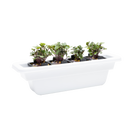
If you've been looking for a showstopping hydroponic herb compound butter roasted pork tenderloin, you've found it. This dish combines the clean, concentrated flavor of fresh herbs grown in your indoor hydroponic garden with a classic French technique — compound butter — to create a roasted pork tenderloin that's juicy, aromatic, and deeply satisfying. Compound butter is simply softened butter blended with fresh herbs, garlic, and seasoning, then used as both a coating and a finishing sauce. When those herbs come straight from your countertop garden, the flavor difference is immediate and undeniable.
Why Hydroponic Herbs Make This Pork Tenderloin Recipe Extraordinary
The secret to any great herb roasted pork tenderloin is herb quality. Grocery store herbs travel hundreds of miles before they reach your kitchen, losing volatile aromatic oils — the compounds responsible for flavor and fragrance — along the way. Hydroponically grown herbs, harvested minutes before cooking, retain those oils at peak concentration.
According to a study from the University of Arizona's Controlled Environment Agriculture Center, hydroponically grown basil contains measurably higher levels of essential oils compared to field-grown counterparts under equivalent harvest conditions. Those oils are exactly what perfume your compound butter and infuse the pork as it roasts.
Hydroponic growing also means you control the environment precisely. Rise Gardens systems maintain optimal nutrient delivery through an EC (electrical conductivity) range of 1.2–2.0 mS/cm for most herbs, and a pH range of 5.5–6.5 — conditions that encourage robust leaf production and strong flavor profiles. When your rosemary, thyme, and chives are thriving in those conditions, your homegrown herb pork dish tastes like it came from a professional kitchen.
Which Herbs Should You Grow for This Indoor Garden Pork Recipe?
For the compound butter in this recipe, you'll want a combination of woody and soft herbs. Here's what to grow and why each one earns its place on the cutting board:
- Rosemary — Piney, resinous, and bold. It stands up to high oven heat without losing its character and pairs classically with pork.
- Thyme — Earthy and slightly floral, thyme adds depth that rosemary alone can't provide. It's one of the fastest-growing herbs in a hydroponic system.
- Chives — Mild onion flavor that brightens the butter and balances the richness of the fat.
- Flat-leaf parsley — Fresh, grassy, and slightly peppery. Parsley acts as the herb that ties the compound butter together and keeps it from tasting too heavy.
- Sage (optional) — Adds a savory, slightly musky note that's particularly good if you're serving the pork in autumn or winter.
All five of these herbs grow beautifully in a Personal Garden — Rise Gardens' compact countertop hydroponic system — meaning you can maintain a continuous supply without dedicating significant kitchen real estate. If you want to grow a wider variety, the The Rise Garden 3 gives you a full-size multi-tier growing system that can support dozens of herb pods simultaneously, so you're never rationing rosemary again.
How to Make Hydroponic Herb Compound Butter
Compound butter takes about 10 minutes to prepare and can be made up to a week in advance. Once you've made it once, you'll find yourself reaching for it on everything from grilled chicken to roasted vegetables.
Ingredients for the Compound Butter
- 8 tablespoons (1 stick) unsalted butter, softened to room temperature
- 2 tablespoons fresh rosemary, finely minced
- 2 tablespoons fresh thyme leaves, stripped from stems
- 2 tablespoons fresh chives, thinly sliced
- 2 tablespoons flat-leaf parsley, finely chopped
- 3 cloves garlic, minced or pressed
- 1 teaspoon lemon zest
- 1 teaspoon kosher salt
- ½ teaspoon freshly ground black pepper
- ¼ teaspoon red pepper flakes (optional)
Instructions
- Harvest your herbs from your indoor garden. Rinse gently under cool water, pat completely dry with paper towels, and let air dry for 5 minutes. Moisture is the enemy of compound butter — it causes it to separate.
- Mince all herbs finely. The smaller the pieces, the more evenly the flavor distributes through the butter.
- In a medium bowl, combine softened butter with all herbs, garlic, lemon zest, salt, pepper, and red pepper flakes. Use a fork to mash and fold everything together until fully incorporated.
- Taste and adjust seasoning.
- Scoop the butter onto a sheet of plastic wrap, form into a log shape, and roll tightly. Twist the ends closed. Refrigerate for at least 1 hour before using, or freeze for up to 3 months.
Hydroponic Herb Compound Butter Roasted Pork Tenderloin: The Full Recipe
Pork tenderloin is one of the leanest cuts of meat available — the USDA reports that a 3-ounce serving of cooked pork tenderloin contains approximately 122 calories and just 3 grams of total fat, making it one of the leanest protein options in any butcher case. Because it's so lean, it benefits enormously from the fat and moisture that compound butter provides during roasting.
Ingredients
- 2 pork tenderloins (approximately 1 lb each), silver skin removed
- All of the herb compound butter (recipe above), divided
- 1 tablespoon olive oil
- 1 teaspoon kosher salt
- ½ teaspoon black pepper
- Kitchen twine (optional, for trussing)
Instructions
- Preheat your oven to 425°F (220°C). High heat is key to getting a good crust on the outside while keeping the interior tender.
- Prepare the tenderloins. Pat them completely dry with paper towels. Season all sides with salt and pepper. If the thin tail end of the tenderloin is much narrower than the rest, fold it under and tie with kitchen twine so the meat cooks evenly.
- Apply the compound butter. Reserve about one-third of your compound butter for finishing. Coat the tenderloins generously with the remaining two-thirds, pressing it into the surface so it adheres.
- Sear the meat. Heat olive oil in an oven-safe skillet (cast iron is ideal) over medium-high heat until shimmering. Sear the tenderloins for 2 minutes per side, turning to brown all surfaces. This step builds the Maillard reaction crust that gives the dish its depth of flavor.
- Roast. Transfer the skillet to the preheated oven. Roast for 15–18 minutes, or until an instant-read thermometer inserted into the thickest part reads 145°F (63°C) — the USDA-recommended safe internal temperature for whole pork cuts as updated in 2011.
- Rest and finish. Remove from the oven, tent loosely with foil, and let rest for 5–7 minutes. Resting allows the juices to redistribute throughout the meat. While still hot, top with the reserved compound butter, letting it melt over the surface.
- Slice and serve. Cut into 1-inch medallions on a slight diagonal. Spoon any pan juices and melted butter over the top before serving.
Serving Suggestions
This homegrown herb pork dish pairs beautifully with roasted root vegetables, creamy polenta, or a simple green salad dressed with lemon vinaigrette. The compound butter produces enough pan drippings to serve as a light sauce — no additional gravy needed.
What Are the Best Conditions for Growing Culinary Herbs Hydroponically?
Growing herbs indoors hydroponically is more forgiving than most people expect, but a few parameters make a real difference in leaf density, flavor intensity, and harvest yield.
Light: Most culinary herbs need 14–16 hours of light per day to thrive indoors. Rise Gardens systems use full-spectrum LED lighting calibrated for plant growth, delivering the right wavelengths without requiring you to adjust anything manually.
Nutrients: Hydroponic herbs receive all their nutrition directly through the water rather than soil. Using quality nutrients formulated for leafy herbs ensures your plants get the right ratio of nitrogen, phosphorus, and potassium at each growth stage. Nitrogen is especially critical for herbs — it drives leafy green growth and intensifies aromatic oil production.
pH: pH measures how acidic or alkaline your water solution is on a scale of 0–14. For herbs, the ideal range is 5.5–6.5. Outside this range, plants can't absorb nutrients efficiently regardless of how much you add — a concept called nutrient lockout.
EC (Electrical Conductivity): EC measures the concentration of dissolved nutrients in your water. Higher EC means more nutrients in solution. Most herbs perform best between 1.2 and 2.0 mS/cm. Rise Gardens systems are designed to take the guesswork out of these parameters, especially for newer growers.
NASA's Veggie project — the space agency's ongoing research into growing food in microgravity aboard the International Space Station — has demonstrated that controlled-environment hydroponic growing produces consistent, high-quality leafy crops with 90% less water than traditional soil farming. That same efficiency is what makes your indoor countertop garden surprisingly productive week after week.
If you want a larger-scale setup that supports a full herb collection alongside vegetables, The Rise Loft offers a furniture-grade design that integrates beautifully into living spaces while providing substantial growing capacity across multiple tiers.
How Do You Harvest Herbs from Your Indoor Garden Without Killing the Plant?
This is one of the most common questions from new hydroponic gardeners, and the answer directly affects how much herb you'll have available for recipes like this one.
The golden rule is to never harvest more than one-third of the plant at a time. Removing too much foliage at once stresses the plant and slows regrowth significantly. Instead, harvest from the top down — cut just above a leaf node (the point where a leaf meets the stem), and the plant will branch out from that node, producing two new stems where one existed before.
For rosemary and thyme, use sharp scissors or herb snips and cut stems in 3–4 inch lengths. For chives and parsley, cut individual stems at the base, leaving at least 2 inches of growth above the root collar. Regular harvesting actually encourages denser, more productive plants — it's a system that rewards frequent cooking.
Starting your herbs from seed pods in a Rise Gardens system means the germination and early growth stages are already optimized. By the time your herbs are ready for their first harvest, they're established enough to handle the regular cutting that a recipe like this pork tenderloin demands.
Frequently Asked Questions
Can I use dried herbs instead of fresh hydroponic herbs in the compound butter?
You can use dried herbs in a pinch, but the flavor profile will be notably different. Dried herbs are roughly 3 times more concentrated than fresh, so use one-third the quantity. That said, the brightness and aromatic complexity that makes this hydroponic herb compound butter roasted pork tenderloin special comes specifically from fresh herbs harvested close to cooking time — dried herbs simply can't replicate that quality.
What internal temperature should pork tenderloin reach before it's safe to eat?
The USDA updated its safe cooking guidelines for whole pork cuts in 2011, setting the recommended internal temperature at 145°F (63°C) followed by a 3-minute rest. At this temperature, pork tenderloin will be slightly pink in the center — which is safe, correct, and results in the juiciest texture. Cooking beyond 160°F causes the lean meat to dry out rapidly.
How long does compound butter last, and how should I store it?
Tightly wrapped compound butter keeps in the refrigerator for up to 7 days and in the freezer for up to 3 months. Freeze it in individual tablespoon-sized portions by slicing the log before freezing — that way you can pull out exactly what you need for a quick weeknight dinner without thawing the entire batch.
Which herbs grow fastest in a hydroponic indoor garden?
Chives, basil, and cilantro are among the fastest-growing herbs in hydroponic systems, often reaching harvestable size within 3–4 weeks from seed germination. Rosemary and thyme are slower but highly productive once established, with rosemary typically ready for first harvest around 6–8 weeks. Growing multiple varieties simultaneously in your indoor garden means you'll always have something ready to harvest for recipes like this indoor garden pork recipe.