This hydroponic herb compound butter roasted salmon recipe transforms a simple weeknight dinner into something genuinely impressive — using fresh herbs you grew yourself, indoors, year-round. Compound butter is a classic French technique where softened butter is blended with aromatics, herbs, and seasonings, then chilled into a firm log that melts luxuriously over hot food. When the herbs come straight from a hydroponic system — meaning plants grown in a nutrient-rich water solution rather than soil — the flavor is brighter, the color is more vibrant, and the satisfaction is completely unmatched. Whether you're serving this as an easy weeknight homegrown herb seafood dinner or an impressive weekend centerpiece, this recipe will become a permanent fixture in your rotation.
Why Hydroponically Grown Herbs Make the Best Compound Butter
The herbs you grow in a hydroponic system aren't just convenient — they're measurably more flavorful and nutrient-dense than what typically sits on a grocery store shelf. According to the USDA Agricultural Research Service, herbs and leafy greens begin losing volatile aromatic compounds within hours of harvest. When you snip chives, dill, tarragon, and parsley directly into your butter mixture minutes before prep, you're capturing peak essential oil concentration — the compounds responsible for that punchy, garden-fresh taste.
A study published by researchers at the University of Mississippi found that hydroponic basil contained up to 20% higher concentrations of key phenolic compounds compared to field-grown counterparts under controlled conditions. While basil isn't the star of this recipe, the principle applies broadly: hydroponics delivers consistent light, precise nutrients (the mineral elements dissolved in water that feed plant growth), and stable pH (the measure of acidity or alkalinity in the nutrient solution, ideally kept between 5.5–6.5 for most herbs) — all of which drive superior herb quality.
Grow your herbs using Rise Gardens nutrients formulated specifically for leafy greens and herbs, and you'll notice the difference in density and fragrance from your very first harvest.
What Herbs Should You Grow for a Fresh Herb Salmon Recipe?
The best compound butter for roasted salmon uses a mix of soft, tender herbs — the kind that thrive in an indoor hydroponic setup and can be harvested repeatedly without replanting. Here's the lineup that creates the most balanced flavor profile for this fresh herb salmon recipe:
- Dill — The classic pairing for salmon. Its feathery fronds bring a bright, anise-adjacent freshness that cuts through rich butter.
- Flat-leaf Parsley — Adds an herbaceous, slightly peppery base note and beautiful green color.
- Chives — Mild onion flavor without the sharpness of raw onion. They grow quickly in hydroponic systems and are ready for harvest in as little as 3–4 weeks.
- Tarragon — A subtle licorice note that elevates the butter from simple to sophisticated. Use sparingly — it's assertive.
- Thyme — Woody and aromatic. Strip the tiny leaves from the stems and mince finely.
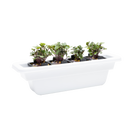
All five of these herbs grow beautifully in a Personal Garden — Rise Gardens' compact countertop hydroponic system that fits on a kitchen counter and keeps fresh herbs within arm's reach of your cutting board. With pre-seeded seed pods, you can have your first harvest ready in 3–5 weeks depending on the variety.
The Hydroponic Herb Compound Butter Roasted Salmon Recipe
This indoor garden fish recipe serves four people and comes together in under 40 minutes, with most of that time being passive oven roasting. The compound butter can be made up to five days in advance and stored in the refrigerator, or frozen for up to two months — making it a great meal-prep staple.
Ingredients
For the Herb Compound Butter:
- 8 tablespoons (1 stick) unsalted butter, softened to room temperature
- 2 tablespoons fresh dill, finely chopped (from your indoor garden)
- 1 tablespoon flat-leaf parsley, finely chopped
- 1 tablespoon chives, thinly sliced
- 1 teaspoon fresh tarragon, minced
- 1 teaspoon fresh thyme leaves
- 1 small garlic clove, minced or grated on a microplane
- 1 teaspoon lemon zest
- 1 tablespoon fresh lemon juice
- ½ teaspoon flaky sea salt
- ¼ teaspoon freshly cracked black pepper
For the Salmon:
- 4 salmon fillets (6 oz each), skin-on, pin bones removed
- 1 tablespoon olive oil
- ½ teaspoon kosher salt
- ¼ teaspoon black pepper
- Lemon slices and extra fresh herbs for garnish
Instructions
Step 1: Make the Compound Butter
In a medium bowl, combine the softened butter with all the chopped herbs, garlic, lemon zest, lemon juice, salt, and pepper. Mix thoroughly with a fork or rubber spatula until the herbs are evenly distributed throughout the butter. Taste and adjust seasoning.
Lay a sheet of plastic wrap flat on your counter. Spoon the butter mixture into the center in a rough log shape. Roll the plastic wrap around the butter and twist the ends tightly to form a compact cylinder about 1.5 inches in diameter. Refrigerate for at least 30 minutes, or until firm.
Step 2: Prep the Salmon
Preheat your oven to 400°F (205°C). Line a rimmed baking sheet with parchment paper or aluminum foil. Pat the salmon fillets completely dry with paper towels — this step is critical for proper browning. Brush each fillet with olive oil and season with kosher salt and black pepper.
Step 3: Roast the Salmon
Place the salmon fillets skin-side down on the prepared baking sheet, leaving at least an inch between each piece. Roast at 400°F for 12–15 minutes, depending on thickness. A 1-inch thick fillet will be perfectly cooked — opaque on the outside and just barely translucent at the center — at around 13 minutes. The USDA recommends an internal temperature of 145°F for fish, measured at the thickest point with an instant-read thermometer.
Step 4: Finish and Serve
Remove the salmon from the oven and immediately place a ¼-inch thick slice of the chilled herb compound butter on top of each fillet. The residual heat from the salmon will melt the butter slowly, creating a glossy, fragrant herb sauce that pools naturally around the fish. Serve immediately with lemon slices and a few sprigs of fresh dill or parsley from your garden as garnish.
How Does Growing Herbs Indoors Year-Round Change Home Cooking?
The most consistent piece of feedback from Rise Gardens growers is simple: when fresh herbs are always available, you cook differently. You stop reaching for dried herbs as a substitute. You start adding a handful of chives to scrambled eggs on a Tuesday. You build recipes like this homegrown herb seafood dinner around what's ready to harvest rather than what's marked up at the grocery store.
According to NASA's Veggie Project — an ongoing research initiative studying plant growth in space environments — growing food in enclosed, controlled-light systems produces consistent yields regardless of external season or climate. That same principle applies to a kitchen countertop: your herbs don't know it's February in Minnesota. They grow under full-spectrum LED light, fed by precisely balanced nutrient solution, completely indifferent to the weather outside.
The economic case is compelling too. The average American household spends approximately $46 per year on fresh herbs at the grocery store, according to data from the USDA Economic Research Service — often throwing away more than half of each bunch before it wilts. A hydroponic system eliminates that waste entirely: you harvest exactly what you need, and the plant keeps growing.
For households that cook fish, poultry, and vegetable-forward meals regularly, a larger system like The Rise Garden 3 — Rise Gardens' full-size indoor hydroponic system — supports simultaneous growth of 36 plants across multiple tiers, making it easy to keep dill, parsley, chives, thyme, tarragon, and several other varieties growing at once without competition for space.
Variations and Serving Suggestions for Your Indoor Garden Fish Recipe
The compound butter formula in this recipe is a template, not a fixed rule. Once you're comfortable with the base technique, your indoor garden becomes a flavor laboratory. Here are a few tested variations worth exploring:
- Miso-Herb Butter: Blend 1 tablespoon of white miso paste into the base recipe and reduce the salt by half. The umami depth pairs exceptionally well with salmon.
- Spicy Cilantro-Lime: Swap the dill and tarragon for fresh cilantro and a minced serrano pepper. Add lime zest instead of lemon. This variation works beautifully with the same roasting method.
- Brown Butter Herb: Instead of raw softened butter, start with brown butter (cook unsalted butter in a saucepan until golden and nutty-smelling), let it solidify in the refrigerator, then proceed with the herb mixing. The nutty base adds remarkable complexity.
For plating, serve the salmon over a bed of quick-wilted spinach, alongside roasted asparagus, or on top of a simple lemon-dressed arugula salad — all greens that you can grow simultaneously in a The Rise Loft, Rise Gardens' premium indoor garden designed with furniture-grade materials that complement modern home interiors while delivering a full growing system.
Pair the finished dish with a crisp, unoaked Chardonnay or a dry Pinot Gris. The acidity in both wines mirrors the lemon in the compound butter and cuts cleanly through the richness of both the fish and the fat.
How to Harvest Herbs Without Killing Your Plants
Getting maximum yield from your indoor herb garden requires understanding one key principle: most culinary herbs are cut-and-come-again plants, meaning regular harvesting actually stimulates bushier, more productive regrowth. Here's how to harvest each herb in this recipe correctly:
- Dill: Snip fronds from the outer edge of the plant, leaving the central growing tip intact. Never remove more than one-third of the plant at a single harvest.
- Parsley: Cut entire outer stems at the base, close to the crown of the plant. New growth emerges from the center.
- Chives: Cut the entire clump down to about 1 inch above the growing medium. The plant will fully regrow in 2–3 weeks.
- Tarragon: Pinch back stem tips regularly to prevent flowering, which causes the leaves to lose flavor intensity.
- Thyme: Harvest the top third of each stem. Avoid cutting into woody, brown base growth — new shoots emerge only from green tissue.
The EC (electrical conductivity) of your nutrient solution — a measure of how many dissolved minerals are present in the water — directly affects how quickly your herbs recover after harvesting. Rise Gardens nutrients are pre-formulated to maintain optimal EC ranges for leafy herbs, removing the guesswork for growers at every experience level.
Frequently Asked Questions
Can I use dried herbs instead of fresh for the compound butter?
You can, but the flavor profile will be significantly different. Dried herbs have had their volatile aromatic oils concentrated through the drying process, so they taste more intense but less bright and fresh. If substituting, use one-third the amount called for (so 2 tablespoons fresh dill becomes roughly 2 teaspoons dried). That said, the entire point of this recipe is to showcase the superior flavor of hydroponically grown, freshly harvested herbs — so growing your own is strongly recommended for the best result.
What is hydroponic herb growing, and how is it different from soil gardening?
Hydroponic growing is a method of cultivating plants in a nutrient-rich water solution rather than soil. The roots are supported by an inert growing medium — such as the coco coir used in Rise Gardens seed pods — while a precisely balanced liquid nutrient solution delivers everything the plant needs directly to the root zone. This eliminates soil-borne pests and diseases, accelerates growth rates, and makes it possible to grow fresh herbs indoors year-round regardless of outdoor climate or season.
How long does herb compound butter last, and how should I store it?
Wrapped tightly in plastic wrap and stored in the refrigerator, herb compound butter stays fresh and flavorful for up to 5 days. For longer storage, wrap the plastic-wrapped log in a layer of aluminum foil and freeze it for up to 2 months. Slice off rounds directly from frozen — there's no need to thaw the entire log. Label the foil with the herb combination and date so you can keep track of multiple flavors if you make batches ahead.
What internal temperature should salmon reach when roasted?
The USDA recommends cooking fish to an internal temperature of 145°F (63°C), measured at the thickest point of the fillet with an instant-read thermometer. At this temperature, the salmon will be fully opaque and will flake cleanly. Many chefs prefer pulling salmon from the oven at 125–130°F for a silkier, more medium-style texture, but the USDA guideline of 145°F is the food-safe standard, particularly important when cooking for children, pregnant individuals, or immunocompromised guests.