There are few things more satisfying in the kitchen than a hydroponic herb compound butter roasted sea bass — a dish where silky, herb-packed butter melts over a perfectly roasted fillet of sea bass, filling your kitchen with an aroma that feels impossibly restaurant-worthy. Compound butter is simply softened butter blended with fresh herbs, aromatics, and seasonings, then chilled and sliced onto hot food to finish it with richness and brightness. When those herbs come straight from your own indoor hydroponic garden, the flavor difference is real, measurable, and deeply satisfying. This recipe is built around the idea that your windowsill or countertop can be the most powerful ingredient in your kitchen.
Why Hydroponic Herbs Make the Best Compound Butter
Store-bought herbs travel an average of 1,500 miles before they reach a grocery store shelf, according to research tracking the U.S. food supply chain. Every hour after harvest, volatile aromatic compounds — the molecules responsible for the bright, punchy flavors in basil, tarragon, and chives — begin to degrade. By the time those herbs reach your cutting board, you may be working with a fraction of their original flavor potential.
Hydroponic herbs grown in your home are harvested at peak potency, minutes before they hit the pan. Hydroponics is a method of growing plants in a nutrient-rich water solution rather than soil, delivering minerals directly to plant roots for faster, more efficient uptake. A NASA Veggie project study confirmed that hydroponically grown leafy greens can match or exceed the nutrient density of field-grown counterparts when grown under optimized light and nutrient conditions — a finding that has supported hydroponic growing aboard the International Space Station since 2015.
For compound butter specifically, that potency matters enormously. The fat in butter acts as a carrier for fat-soluble flavor compounds, amplifying whatever you fold into it. Fresh-from-the-garden herbs mean more of those compounds are present and active when they hit the butter, producing a finished product that tastes genuinely vibrant rather than faintly herby.
The best herbs for a sea bass compound butter from your indoor garden include:
- Tarragon — anise-forward, classically paired with fish in French cuisine
- Chives — mild onion bite, bright green color
- Flat-leaf parsley — clean, grassy, balances richer flavors
- Lemon thyme — citrus-scented, pairs perfectly with seafood
- Dill — feathery, aromatic, and a natural partner for any white fish
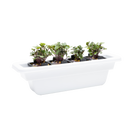
All five of these herbs grow exceptionally well in a hydroponic system. If you are just getting started, the Personal Garden is a compact countertop system that can keep three pods of fresh herbs within arm's reach of your stove year-round.
What Equipment and Ingredients Do You Need?
This is a focused recipe with a short ingredient list. Most of the work is in making the compound butter, which can be prepared up to two weeks in advance and stored in the freezer.
For the Compound Butter
- 8 tablespoons (1 stick) high-quality unsalted butter, at room temperature
- 2 tablespoons fresh tarragon leaves, finely chopped
- 2 tablespoons fresh chives, thinly sliced
- 1 tablespoon fresh flat-leaf parsley, finely chopped
- 1 tablespoon fresh dill, finely chopped
- 1 teaspoon lemon zest
- 1 small garlic clove, minced or grated on a microplane
- ½ teaspoon flaky sea salt
- ¼ teaspoon freshly ground white pepper
For the Roasted Sea Bass
- 4 sea bass fillets (approximately 6 oz each), skin on, pin bones removed
- 2 tablespoons extra-virgin olive oil
- Flaky sea salt and freshly cracked black pepper
- 1 lemon, sliced into thin rounds
- 4 sprigs of fresh herbs from your garden (for roasting pan aromatics)
Equipment
- Mixing bowl and rubber spatula
- Plastic wrap or parchment paper
- Oven-safe skillet or roasting pan
- Instant-read thermometer
How to Make Hydroponic Herb Compound Butter Roasted Sea Bass Step by Step
This fresh herb roasted sea bass recipe moves in two stages: making the compound butter first, then roasting the fish. The butter can be made days ahead, which makes this an excellent weeknight dinner despite its impressive presentation.
Step 1: Make the Compound Butter
Add the room-temperature butter to a mixing bowl and beat lightly with a spatula until it is smooth and spreadable. Fold in all of the chopped herbs, lemon zest, garlic, salt, and pepper. Mix thoroughly until the herbs are evenly distributed and the butter has taken on a pale green color.
Spoon the butter onto a sheet of plastic wrap or parchment paper and roll it into a log shape approximately 1.5 inches in diameter. Twist the ends closed tightly. Refrigerate for at least 1 hour to firm up before using, or freeze for longer storage. When you are ready to use it, slice rounds about ¼ inch thick directly from the log.
Step 2: Prepare the Sea Bass
Remove your sea bass fillets from the refrigerator 20 minutes before cooking to allow them to come to room temperature — this promotes even cooking. Pat each fillet completely dry with paper towels. Moisture on the surface of the fish will steam rather than roast, preventing the crispy skin you are aiming for.
Preheat your oven to 400°F (204°C). Season the fillets generously on both sides with flaky sea salt and cracked black pepper.
Step 3: Sear and Roast
Heat an oven-safe skillet over high heat until it is very hot. Add the olive oil and immediately place the fillets skin-side down. Press each fillet gently with a spatula for the first 30 seconds to prevent curling. Sear for 2 to 3 minutes until the skin is golden and crispy.
Transfer the pan to the preheated oven. Roast for 6 to 8 minutes, depending on the thickness of your fillets. Sea bass is fully cooked at an internal temperature of 145°F (63°C), as recommended by the USDA Food Safety and Inspection Service. An instant-read thermometer inserted into the thickest part of the fillet is the most reliable way to confirm doneness.
Step 4: Finish and Serve
Remove the pan from the oven and immediately place one or two rounds of compound butter on top of each fillet. The residual heat will melt the butter slowly over the fish, creating a glossy, herb-flecked sauce right on the plate. Serve immediately alongside roasted vegetables, a simple green salad, or crusty bread to catch every drop of that herb butter.
How to Grow the Best Herbs for This Indoor Garden Herb Butter Fish Recipe
Growing the herbs for this dish in a hydroponic system is genuinely straightforward, and the results outpace what you can buy at any grocery store. Hydroponics works by delivering water enriched with precisely measured nutrients directly to plant roots, bypassing the inconsistency of soil composition and giving plants exactly what they need to thrive.
Here are the key growing parameters to know for the herbs in this recipe:
- pH range: Herbs prefer a slightly acidic solution between pH 5.5 and 6.5. pH stands for potential hydrogen and measures how acidic or alkaline your water solution is on a scale from 0 to 14. Keeping herbs in range ensures optimal nutrient absorption.
- EC (Electrical Conductivity): EC measures the concentration of dissolved minerals in your water. For most culinary herbs, an EC between 1.0 and 1.6 mS/cm is appropriate. Higher values can stress delicate herbs like tarragon and dill.
- Light: Culinary herbs need 14 to 16 hours of light per day. Rise Gardens systems use full-spectrum LED grow lights tuned specifically for plant growth, so you do not need to think about this — the system manages it for you.
- Harvest timing: Harvest herbs in the morning before the lights have been on for several hours. This is when essential oil concentration in leaves is typically highest.
If you want to grow enough herbs to keep compound butter stocked in your freezer consistently, the The Rise Garden 3 gives you a full-size indoor hydroponic garden system with multiple growing rows, so you can have tarragon, dill, chives, parsley, and lemon thyme all going simultaneously without crowding. For a premium setup that doubles as a furniture piece in your dining room or kitchen, The Rise Loft is a furniture-grade indoor garden that grows herbs beautifully while looking like it belongs in an interior design magazine.
Start your herb garden with pre-seeded seed pods designed specifically for hydroponic systems, so you skip the guesswork of germination and get to harvesting faster.
Storage, Variations, and Make-Ahead Tips
One of the best features of compound butter is how well it stores. A tightly wrapped log will keep in the refrigerator for up to two weeks or in the freezer for up to three months. Slice off rounds as needed and return the rest to storage. This means a single 20-minute batch of herb butter can elevate dozens of meals over the coming weeks.
Beyond sea bass, this hydroponic herb garden fish recipe compound butter is excellent on:
- Grilled or pan-seared halibut, cod, or branzino
- Roasted chicken thighs or a spatchcocked whole chicken
- Steamed new potatoes or roasted asparagus
- Grilled corn on the cob
- Toasted sourdough bread as an elevated herb bread
You can also vary the herb blend seasonally based on what is thriving in your garden. In summer, swap in fresh basil and mint. In autumn, sage and rosemary take the compound butter in a warmer, earthier direction that pairs well with roasted root vegetables.
Frequently Asked Questions
Can I use dried herbs instead of fresh for compound butter?
You can use dried herbs in a pinch, but the flavor will be significantly muted compared to fresh. Dried herbs have lost most of their volatile aromatic compounds and lack the brightness that makes a garden-fresh compound butter so distinctive. If you must substitute, use one-third the amount of dried herbs called for in the recipe, since the flavor is more concentrated than fresh by volume.
What is the best internal temperature for roasted sea bass?
The USDA recommends cooking all fish to an internal temperature of 145°F (63°C) measured at the thickest part of the fillet. At this temperature, sea bass flesh is fully opaque, flakes easily with a fork, and is safe to eat. Use an instant-read digital thermometer for the most accurate reading rather than relying on visual cues alone.
How long does it take to grow herbs in a hydroponic system?
Most culinary herbs reach a harvestable size in 3 to 5 weeks in an optimized hydroponic system, compared to 6 to 10 weeks in soil. Chives and parsley tend to be among the faster growers, while tarragon can take slightly longer to establish. Once a plant reaches maturity, consistent harvesting of the outer leaves encourages continuous new growth, so a single pod can produce fresh herbs for months.
Does growing herbs hydroponically change their flavor?
Research, including work associated with the NASA Veggie project, has shown that hydroponically grown greens and herbs can match or exceed the flavor and nutrient profiles of soil-grown counterparts under optimized conditions. Many home growers report that their hydroponic herbs taste more intense and vibrant than store-bought varieties, which is largely attributed to the fact that they are harvested and used immediately rather than after days of transit and shelf storage.