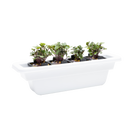
A hydroponic herb focaccia recipe is exactly what it sounds like: a classic Italian flatbread elevated by fresh herbs you've grown yourself in a soil-free, water-based hydroponic system. Focaccia — a dimpled, olive-oil-rich bread with roots in ancient Liguria — becomes something truly special when the rosemary, thyme, and oregano piled across its golden surface were snipped from living plants just minutes before baking. Growing those herbs hydroponically means you have a reliable, year-round supply of intensely aromatic cuttings, no matter the season outside your window. This guide walks you through growing the herbs, harvesting them at peak flavor, and baking a loaf that will make your kitchen smell incredible.
Why Hydroponic Herbs Make a Better Focaccia
Flavor in fresh herbs comes primarily from volatile aromatic compounds — the essential oils stored in tiny glands on the leaves and stems. Research from the University of Arizona's Controlled Environment Agriculture Center has shown that hydroponic herbs can produce measurably higher concentrations of these essential oils compared to field-grown counterparts, largely because you control every input: light spectrum, nutrient concentration, and root-zone moisture. That means the rosemary you strip from a hydroponic plant and press into your focaccia dough delivers a more vivid, resinous punch than a bunch that traveled three days in a refrigerated truck.
Hydroponics is the practice of growing plants in a nutrient-rich water solution rather than soil. The roots are supported by an inert medium — rock wool, clay pebbles, or a foam plug — while an electric pump or passive wick delivers a precisely calibrated blend of macro- and micronutrients directly to them. Because there is no soil buffer to work through, plants can redirect energy from root foraging into leaf and stem production, which typically results in faster growth and denser foliage. For a baker who wants a steady supply of fresh herbs, that efficiency matters enormously.
According to USDA data, Americans spend an average of $2.1 billion on fresh herbs annually, yet most store-bought herbs lose 30–40% of their aromatic compounds within 48 hours of harvest due to cold-chain exposure. Growing your own eliminates that loss entirely — you harvest and use in the same hour.
Which Herbs Grow Best in a Hydroponic System for This Homegrown Herb Bread Recipe?
For this homegrown herb bread recipe, you'll want a core trio: rosemary, thyme, and oregano. All three are Mediterranean herbs that thrive under the consistent temperature and light conditions a quality indoor garden provides. Here's a quick breakdown of each:
- Rosemary (Salvia rosmarinus): The star of any fresh rosemary focaccia. It's a woody, slow-starting herb that rewards patience — expect full harvestable growth in 6–8 weeks from a seed pod. Its needlelike leaves hold up beautifully under high baking heat (425°F / 220°C), releasing fragrant camphor-pine notes into the crust.
- Thyme (Thymus vulgaris): A faster grower, typically ready in 3–4 weeks. Thyme brings an earthy, slightly floral note that pairs seamlessly with rosemary in a hydroponic rosemary and thyme flatbread. Strip whole sprigs and lay them across the dough before baking.
- Oregano (Origanum vulgare): Robust and slightly peppery, oregano adds a rustic Mediterranean backbone. It grows vigorously in hydroponic systems and can be harvested repeatedly without stressing the plant.
You can start all three using Rise Gardens seed pods, which come pre-seeded and pH-buffered so there's no guesswork in the germination phase. Simply drop the pod into your garden, add water, and the system handles the rest.
NASA's Veggie project, which has grown fresh food aboard the International Space Station since 2014, validated that leafy greens and herbs grown in controlled hydroponic environments are safe, nutritious, and microbiologically equivalent to their earth-grown counterparts — a finding that underscores the reliability of indoor hydroponic growing for everyday home use.
How to Set Up Your Indoor Garden for a Year-Round Herb Supply
Consistency is the secret to always having fresh herbs on hand for baking. A well-configured indoor hydroponic garden runs on three pillars: light, nutrients, and water chemistry.
Light: Mediterranean herbs need 14–16 hours of full-spectrum light daily. Rise Gardens systems use energy-efficient LED panels tuned to the wavelengths plants use most — primarily blue (400–500 nm) for vegetative growth and red (600–700 nm) for robust leaf development. The built-in timers handle the light schedule automatically.
Nutrients: Unlike soil gardening, hydroponics requires you to supply all essential macro and micronutrients directly through the water. The correct Electrical Conductivity (EC) — a measure of nutrient concentration in the water — for herbs like rosemary and thyme sits between 1.0 and 1.6 mS/cm. Rise Gardens nutrients are formulated specifically for the growth stages of edible plants and come with straightforward dosing instructions, so you don't need a chemistry degree to get it right.
pH: pH measures how acidic or alkaline your water solution is on a scale of 0–14. Herbs prefer a slightly acidic range of 5.5–6.5. Outside that window, nutrient uptake degrades even if the nutrients are present in the water. Most Rise Gardens systems include pH testing supplies, and adjustments take about 30 seconds with a drop of pH Up or pH Down solution.
If you're just getting started and have limited counter space, the Personal Garden is a compact countertop hydroponic system that holds enough herb pods to supply a dedicated baker. For a larger household — or someone who wants to grow herbs alongside lettuces and microgreens — The Rise Garden 3 offers a full-size, multi-tier system that dramatically expands your growing capacity. If aesthetics matter as much as output, The Rise Loft is a furniture-grade indoor garden designed to look as good in your kitchen as the focaccia you'll bake with it.
Hydroponic Herb Focaccia Recipe: Step-by-Step
This recipe produces one 9x13-inch pan of focaccia — thick, pillowy, and loaded with fresh herb flavor. Total active time is about 30 minutes; the dough does most of the work while you tend your garden.
Ingredients
- 500g (4 cups) bread flour
- 7g (1 packet) active dry yeast
- 10g (2 tsp) fine sea salt
- 375ml (1½ cups) warm water (110°F / 43°C)
- 6 tbsp extra-virgin olive oil, divided
- 3 tbsp fresh rosemary leaves, stripped from stems (harvested same day)
- 2 tbsp fresh thyme sprigs
- 1 tbsp fresh oregano leaves
- Flaky sea salt for finishing
- 4 cloves garlic, thinly sliced (optional)
Instructions
- Activate the yeast. Combine warm water and yeast in a large bowl. Let stand 5–10 minutes until foamy. If it doesn't foam, your water was too hot or cold — start again.
- Mix the dough. Add flour and fine sea salt to the yeast mixture. Stir until a shaggy dough forms. Add 2 tablespoons of olive oil and mix until incorporated. The dough will be sticky — that's correct for focaccia.
- First rise. Cover the bowl with plastic wrap or a damp towel and let rise at room temperature for 1 hour, or until doubled in size.
- Prepare the pan. Pour 2 tablespoons of olive oil into a 9x13-inch baking pan, spreading it across the bottom and sides.
- Transfer and dimple. Gently turn the dough out into the oiled pan. Stretch it toward the edges — don't force it. Drizzle the remaining 2 tablespoons of olive oil over the top. Use your fingertips to press deep dimples all over the surface.
- Second rise. Cover loosely and let rise another 45 minutes to 1 hour. The dough should look puffy and fill the pan.
- Add your fresh herbs. Press rosemary, thyme sprigs, and oregano leaves firmly into the dimples and across the surface. Add garlic slices if using. Finish with a generous pinch of flaky sea salt.
- Bake. Preheat your oven to 425°F (220°C). Bake for 20–25 minutes until the top is deep golden brown and the bottom is crispy when you lift a corner with a spatula.
- Cool slightly, then slice. Let rest 10 minutes before cutting. The herbs will have crisped slightly at the edges while the embedded portions stay tender and aromatic.
Baker's Notes
For the most vibrant fresh rosemary focaccia indoor garden experience, harvest your rosemary sprigs in the morning when essential oil concentrations tend to be highest. Studies on aromatic herb volatile compounds suggest that post-harvest exposure to air and heat accelerates oil evaporation — using herbs within 30 minutes of cutting delivers maximum flavor impact. This same principle applies to thyme in a hydroponic rosemary and thyme flatbread: strip and use immediately rather than letting it sit on your counter.
Can You Use Other Hydroponic Herbs in This Focaccia?
Absolutely. Focaccia is one of the most forgiving canvases in bread baking, and a well-stocked indoor garden gives you the creative freedom to experiment well beyond the classic rosemary-and-olive-oil formula. Here are a few combinations worth trying:
- Sage and caramelized onion: Hydroponic sage grows in a compact, upright habit that suits countertop gardens. Its bold, slightly musky flavor balances beautifully against sweet, slow-cooked onions pressed into the dough.
- Basil and cherry tomato: Basil is one of the fastest and most productive herbs in a hydroponic system — many growers harvest usable leaves within 3 weeks. Pair large basil leaves with halved cherry tomatoes for a Caprese-inspired flatbread.
- Chives and cream cheese swirl: Chives grow prolifically in indoor systems and offer a mild allium bite. Snip them over the finished focaccia as a finishing herb rather than baking them in, which preserves their bright color and flavor.
- Lemon thyme and sea salt: A citrus-scented variety of standard thyme, lemon thyme's floral brightness cuts through the richness of the olive oil in a way that standard thyme doesn't quite achieve.
The underlying logic is this: because your hydroponic herbs are consistently available and at peak freshness, you're not constrained to whatever looks acceptable at the grocery store on a given week. You pick what's ready, what smells best, and what matches your mood — and you bake accordingly.
How Does Growing Herbs Hydroponically Compare to Buying Them at the Store?
The comparison is worth making concretely. A single clamshell of fresh rosemary at a standard grocery store costs between $2.50 and $4.00 and typically contains 15–25 grams of herb — enough for one or two recipes. Once opened, it lasts 5–7 days under refrigeration before quality degrades significantly.
A rosemary plant grown in a Rise Gardens system, by contrast, can yield repeated harvests over many months. The general rule for harvesting herbs hydroponically is to take no more than one-third of the plant at a time, which encourages bushier regrowth. A single mature rosemary plant can yield 10–15 grams of usable herb per week once established — meaning within 8–10 weeks of initial planting, it has already paid back the cost of its seed pod many times over in equivalent grocery value.
A 2020 analysis by the Association for Vertical Farming estimated that home hydroponic herb production reduces per-unit herb costs by up to 70% compared to retail purchasing over a 12-month period, factoring in electricity and nutrient inputs. That number aligns with the experiences reported broadly by indoor gardening communities and makes the math straightforward for frequent bakers.
Beyond cost, there's the food-miles calculation. The average fresh herb sold in a U.S. grocery store travels approximately 1,500 miles from farm to shelf. Your hydroponic herb travels roughly zero feet from plant to cutting board.
Frequently Asked Questions
How long does it take to grow enough rosemary for focaccia in a hydroponic garden?
Rosemary is one of the slower-growing hydroponic herbs, typically reaching a harvestable size in 6–8 weeks from seed germination. Once established, you can harvest weekly by snipping the top 2–3 inches of each stem — this quantity is typically sufficient for one full pan of focaccia per harvest cycle.
What is the ideal pH for growing rosemary and thyme hydroponically?
Both rosemary and thyme perform best in a nutrient solution with a pH between 5.5 and 6.5. At this range, the plant roots can absorb nitrogen, phosphorus, potassium, and trace minerals efficiently. Readings above 7.0 or below 5.0 will cause nutrient lockout, resulting in yellowing leaves and stunted growth even when nutrients are present in the water.
Can I use dried herbs from my hydroponic garden in this focaccia recipe instead of fresh?
You can, but the flavor profile will shift. Dried herbs are roughly three times more concentrated than fresh, so reduce quantities to about one tablespoon of dried rosemary in place of three tablespoons fresh. That said, the textural element of pressed-in fresh herb sprigs — slightly crispy at the tips, tender underneath — is one of focaccia's defining features and is best achieved with fresh cuttings.
Do hydroponic herbs need different nutrients than soil-grown herbs?
Yes. In soil, plants draw nutrients from organic matter and mineral deposits in the growing medium. In a hydroponic system, the water itself must supply every essential element the plant needs, including calcium, magnesium, iron, and trace minerals that soil provides passively. Rise Gardens nutrients are specifically formulated for edible hydroponic plants, covering all essential macro and micronutrients in the correct ratios for healthy herb production.