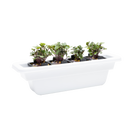
If you want healthy, fast-growing plants in your indoor garden, this hydroponic system water temperature guide covers one of the most overlooked variables in the whole setup: the temperature of your nutrient solution. Water temperature in hydroponics refers to the degree of warmth or coolness of the liquid that delivers oxygen, water, and dissolved nutrients directly to your plant roots. Get it right, and your plants thrive. Get it wrong, and you'll face slow growth, nutrient lockout, or full-blown root rot before you even realize something is off.
Why Water Temperature Matters More Than You Think in Hydroponics
In soil gardening, the earth acts as a buffer — it moderates temperature swings and holds moisture in a way that gives roots some forgiveness. In a hydroponic system, your roots are suspended in or surrounded by the nutrient solution itself. That means the water temperature directly governs how much dissolved oxygen is available, how efficiently your plants absorb nutrients, and how vulnerable your root zone is to harmful pathogens.
Dissolved oxygen (DO) is the key concept here. DO refers to the amount of oxygen molecules present in a liquid solution — and plant roots need oxygen just as much as they need water and nutrients. Cold water holds more dissolved oxygen; warm water holds less. According to basic chemistry, water at 50°F (10°C) can hold roughly twice the dissolved oxygen of water at 86°F (30°C). That gap has enormous consequences inside your reservoir.
Beyond oxygen, temperature also affects how your plants uptake the nutrients you add to the solution. Enzyme activity in plant roots operates within narrow temperature windows. Push outside those windows — in either direction — and the biological machinery that drives nutrient absorption slows down dramatically.
What Is the Optimal Water Temperature for Hydroponics?
The sweet spot for optimal water temperature in hydroponics falls between 65°F and 72°F (18°C to 22°C). Most leafy greens, herbs, and fruiting plants grown in home hydroponic systems perform at their best within this range. Roots stay well-oxygenated, nutrient uptake runs efficiently, and the conditions are inhospitable to the most common root pathogens.
Research from North Carolina State University's Department of Horticultural Science has shown that lettuce grown in nutrient solutions maintained between 68°F and 72°F produced significantly higher biomass than plants grown in solutions above 77°F. That's a meaningful difference you'll see right in your harvest bowl.
Here's a quick reference for the ranges you'll encounter:
- Below 60°F (15°C): Growth slows. Nutrient uptake becomes sluggish, and some plants may show signs of stress or deficiency even when nutrients are present at correct levels.
- 60°F–65°F (15°C–18°C): Acceptable for cold-tolerant crops like spinach and kale, but on the cool side for most herbs and lettuce.
- 65°F–72°F (18°C–22°C): The ideal range for the vast majority of hydroponic crops. Aim to stay here consistently.
- 73°F–77°F (23°C–25°C): A caution zone. Plants can still grow, but dissolved oxygen is dropping and pathogen risk is rising.
- Above 77°F (25°C): High risk. This is the threshold where warm water root rot in hydroponics becomes a serious, fast-moving threat.
If you're growing on a Personal Garden on your kitchen counter, the ambient room temperature in your home — typically 68°F to 74°F — means your reservoir can stay within the ideal window with minimal intervention, especially if you keep the garden away from heat sources like ovens or sunny south-facing windows.
What Is Warm Water Root Rot in Hydroponics — and How Do You Spot It?
Warm water root rot in hydroponics is a condition caused primarily by the oomycete pathogen Pythium — often called water mold — that thrives when reservoir temperatures climb above 75°F to 77°F (24°C to 25°C). When dissolved oxygen drops in warm water, roots become stressed and less able to defend themselves, creating the perfect entry point for Pythium and similar pathogens to colonize the root zone.
The signs are unmistakable once you know what to look for:
- Slimy, brown, or gray roots: Healthy roots are white or light tan. Rotted roots turn dark and feel mushy.
- Foul odor from the reservoir: A swampy or sulfur-like smell coming from the water is a strong indicator of anaerobic bacterial activity.
- Wilting despite adequate water: Because rotted roots can't transport water effectively, plants wilt even when the reservoir is full.
- Yellowing leaves: Nutrient deficiency symptoms appear as the damaged roots fail to absorb minerals properly.
A study published in the journal HortScience found that Pythium infection rates in hydroponic lettuce increased by over 300% when nutrient solution temperatures rose from 68°F to 77°F over a sustained period. That statistic alone makes a compelling case for temperature monitoring as a non-negotiable part of your routine.
The good news: root rot caused by temperature stress is almost entirely preventable. Keep your reservoir in the optimal range, maintain proper dissolved oxygen levels, and you dramatically reduce your risk.
How to Monitor Your Hydroponic Reservoir Temperature
You can't manage what you don't measure. A simple aquarium thermometer — either a submersible digital probe or a stick-on strip — is all you need to start tracking your reservoir temperature. Aim to check it at least once daily, and log the readings if you want to identify patterns tied to seasonal changes, room temperature shifts, or lighting schedules.
Your grow lights generate heat, and that heat radiates downward into your reservoir. LED systems like those used in The Rise Garden 3 run much cooler than older fluorescent or HID setups, which means your reservoir is less likely to absorb excess heat from the lighting system itself. Still, over a 12-to-18-hour light cycle, even low-heat LEDs can nudge reservoir temps upward by a few degrees — enough to matter if your starting point is already on the warm side.
Key monitoring tips:
- Check temperature at the same time each day — ideally after the longest stretch of light exposure when temps are at their peak.
- Place your thermometer probe in the middle of the reservoir, not near any air stones or water pump inlets where localized cooling may give a false reading.
- If you notice a consistent upward trend week over week, address it before it becomes a problem rather than waiting for symptoms to appear in your plants.
Cooling Your Hydroponic Reservoir: Practical Methods That Work
Cooling a hydroponic reservoir doesn't have to be complicated or expensive. There's a range of strategies — from zero-cost to purpose-built — depending on how much of a temperature challenge you're facing.
Passive Cooling Strategies
Insulate your reservoir. Wrapping your reservoir with reflective foam insulation or placing it inside an insulated sleeve reduces heat absorption from ambient room temperature and from light reflection off nearby surfaces. This is particularly effective if your reservoir is light-colored or exposed to warm airflow.
Reduce reservoir light exposure. Light energy hitting the reservoir wall converts directly to heat. Keep your reservoir covered and opaque. This also prevents algae growth, which competes with your plants for dissolved oxygen and nutrients.
Strategic placement. Position your garden away from heat vents, appliances, and direct sunlight through windows. The ambient room temperature around your system has an outsized effect on reservoir temperature over time.
Active Cooling Strategies
Frozen water bottles. A clean, sealed frozen water bottle placed in the reservoir can drop temperatures by 5°F to 10°F fairly quickly. This is a low-cost, immediate solution during heat waves or unexpected temperature spikes.
Aquarium chillers. For larger systems or growers in consistently warm climates, a purpose-built aquarium chiller connects inline with your water pump and actively regulates reservoir temperature. They're an investment, but they deliver precise, hands-off temperature control.
Cooling the room. If you're running a larger system like The Rise Loft in a dedicated grow space, simply lowering the ambient room temperature with air conditioning is often the most effective broad solution. Every degree you drop the room temperature contributes to keeping your reservoir in range.
Increase aeration. Adding an air stone connected to an aquarium air pump increases dissolved oxygen directly, which partially compensates for the reduced DO capacity of slightly warm water. It won't replace proper temperature management, but it adds a meaningful buffer.
According to the NASA Veggie Project — NASA's ongoing research program studying plant growth in space environments — maintaining stable environmental parameters including nutrient solution temperature is one of the highest-priority variables for consistent crop yield. If it matters for growing food in orbit, it matters for your countertop herb garden too.
Temperature, pH, and EC: How These Variables Interact
Water temperature doesn't operate in isolation. It interacts directly with two other critical measurements you should be tracking: pH (potential of hydrogen) and EC (electrical conductivity).
pH measures the acidity or alkalinity of your nutrient solution on a scale from 0 to 14, with 7 being neutral. Most hydroponic crops perform best between pH 5.5 and 6.5. Temperature affects the accuracy of pH meter readings — most meters are calibrated at 77°F (25°C), so if your solution is significantly cooler or warmer, your readings may drift by 0.1 to 0.3 pH units. Always calibrate your meter at a temperature close to your actual solution temperature for the most accurate results.
EC measures the concentration of dissolved salts — essentially how strong your nutrient solution is. As temperature rises, EC readings increase slightly even without adding nutrients, because ions move more freely in warmer water. This means a solution that reads correctly at 68°F may read higher at 78°F, potentially leading you to underfeed your plants if you adjust based on the elevated reading alone. Always factor temperature into your EC interpretation.
Managing all three of these variables in tandem — temperature, pH, and EC — is what separates growers who get consistent, high-yield results from those who struggle to figure out why their plants always seem a little off. The good news is that once you establish a stable environment, these numbers tend to stay within range with only minor, periodic adjustments. Pair proper water management with quality nutrients and well-chosen seed pods, and you're setting yourself up for genuinely excellent harvests.
Frequently Asked Questions
What happens if my hydroponic water temperature is too cold?
If your reservoir drops below 60°F (15°C), plant roots slow their metabolic activity significantly. Nutrient uptake becomes inefficient, meaning your plants may show deficiency symptoms even if your solution is properly mixed. Most common hydroponic crops — lettuce, basil, herbs, and fruiting plants — prefer a minimum of 65°F for consistent, healthy growth.
How quickly can warm water cause root rot in a hydroponic system?
Under the right conditions, Pythium and similar pathogens can colonize a root zone within 24 to 48 hours of a reservoir temperature exceeding 77°F (25°C), especially if dissolved oxygen levels are simultaneously low. Early detection is critical — check your roots weekly and address any temperature spikes immediately to prevent a minor issue from becoming a system-wide loss.
Can I use tap water in my hydroponic reservoir, and does its temperature matter?
Yes, tap water is generally fine for hydroponics as long as you adjust pH and account for any starting mineral content with your EC measurements. The temperature of incoming tap water does matter — very cold tap water added in large quantities can shock plant roots if the temperature differential is more than about 10°F from your existing reservoir temperature. Let fresh water reach room temperature before adding it to your system, or add it gradually.
How often should I change the water in my hydroponic reservoir?
A full reservoir change every 7 to 14 days is a good general practice for home hydroponic systems. Regular water changes prevent salt buildup, remove dead organic matter that pathogens feed on, and give you a fresh baseline for pH and EC management. In warmer conditions where pathogen risk is higher, leaning toward the shorter end of that window — every 7 days — adds a meaningful layer of protection for your root zone.