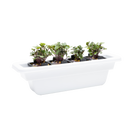
The crops that save you the most money in an indoor garden are fresh herbs, salad greens, and specialty microgreens. Basil alone retails for $3–$5 per small bunch at the grocery store, yet a single hydroponic plant can produce harvests every 7–10 days for months. Growing these high-turnover, expensive produce items at home can cut your weekly grocery spend on fresh greens by $20–$40.
Knowing what to grow in an indoor garden to save the most money means thinking like a shopper first. The crops worth prioritizing are the ones you buy most often, that spoil fastest, and that carry the highest cost per pound at the store. Hydroponics accelerates growth by delivering water and nutrients directly to plant roots, so you harvest faster and more consistently than in soil — making your return on every seed pod even greater.
Which crops have the highest value per pound when grown indoors?
Retail price is your best guide. When you compare cost per pound homegrown versus store-bought, a few categories stand out dramatically:
- Fresh basil: Grocery store basil averages $28–$40 per pound when you factor in the small clamshell portions. A hydroponic basil plant produces continuous harvests for 3–4 months.
- Baby salad greens (arugula, butterhead lettuce, spinach): Pre-washed salad mixes run $6–$10 per 5-oz bag, roughly $19–$32 per pound. Indoors, these crops reach harvest in as few as 21 days from transplant.
- Cilantro and parsley: Frequently purchased in bunches you half-use before they wilt, these herbs retail around $1.50–$3 per bunch but deliver a fraction of what a living plant provides over weeks.
- Kale and Swiss chard: Cut-and-come-again crops that retail for $3–$5 per bunch. Indoor plants regenerate leaves within 5–7 days of harvest under consistent light.
According to the USDA Economic Research Service, the average American household spends roughly $131 per week on groceries, with fresh produce accounting for a significant share. Herbs and bagged salads are among the highest markup items in that category — and the easiest to replace with a countertop or shelf garden.
A study from the University of Mississippi found that home food gardens generate an average return of $530 in produce value per year. Indoor hydroponic systems, which produce year-round without weather interruption, have the potential to exceed that figure when focused on highest value crops to grow indoors.
What makes a crop worth growing indoors for savings?
Not every vegetable earns its spot under the grow lights. Use these three filters before choosing what to plant:
- High retail price per pound. Herbs, specialty greens, and microgreens beat out most root vegetables on this measure. A pound of carrots costs $1. A pound of fresh dill costs closer to $30.
- Short grow cycle. Crops that go from pod to plate in 21–45 days give you more harvests per year. Lettuce, spinach, and most herbs fall in this range.
- Frequent household use. There's no savings in growing something you rarely cook with. Align your garden with your actual shopping list.
Fruiting plants like tomatoes and peppers are tempting, but they require longer grow times (60–90+ days), more vertical space, and more nutrients to support flowering. They can be worth it — especially heirloom cherry tomatoes that retail for $5–$7 per pint — but herbs and greens deliver faster, more consistent savings, especially when you're just starting out.
How does a hydroponic system change the math on homegrown produce costs?
Traditional soil gardening involves seasonal limitations, pest pressure, and inconsistent yields. Hydroponics changes the economics in three important ways:
Year-round production. A soil garden in Chicago goes dormant from October through April. An indoor hydroponic garden runs 365 days a year, which means 12 months of basil instead of 4.
Faster growth. NASA's Veggie project, which developed hydroponic growing for the International Space Station, documented that plants grown in hydroponic systems can grow up to 30–50% faster than soil-grown counterparts under optimized conditions. That speed translates directly into more harvests per year.
Predictable inputs. You know exactly how much you're spending on electricity, water, and nutrients each month. A system like Personal Rise Garden is designed for a countertop footprint and runs on low-wattage LED lighting, keeping operating costs manageable. If you want to scale your savings across more crops simultaneously, The Rise Garden 3 offers three growing levels and supports 36 pods at once — enough to keep a household in fresh greens and herbs continuously. For those who want maximum yield with a premium aesthetic, The Rise Loft combines furniture-grade design with serious growing capacity.
To keep pH in the ideal range for nutrient uptake — between 5.5 and 6.5 for most leafy greens and herbs — Rise Gardens systems are designed to make monitoring straightforward, even if you've never grown hydroponically before.
Building a savings-focused planting strategy
The simplest approach: audit your last month of grocery receipts and highlight every fresh herb or leafy green you bought. Those line items are your planting list.
A practical starting lineup for maximum savings:
- 2–3 basil plants (continuous harvest, highest cost per pound at retail)
- 2 lettuce varieties (butterhead + arugula for variety and fast regrowth)
- 1 cilantro, 1 parsley (weekly use, frequent waste at the store)
- 1 kale or Swiss chard (nutrient-dense, cut-and-come-again)
That lineup, running year-round in a hydroponic system, conservatively replaces $15–$25 in weekly grocery purchases — or $780–$1,300 per year in avoided spending.
Frequently Asked Questions
How much does it actually cost to run an indoor hydroponic garden?
Operating costs vary by system size, but a small countertop hydroponic garden typically uses 20–45 watts of LED lighting and consumes minimal water — often just 1–2 liters per week once established. Monthly costs for electricity, water, nutrients, and seed pods generally run $10–$25, depending on your local utility rates and how many pods you're running.
Are expensive produce items like cherry tomatoes worth growing indoors?
Yes, but with realistic expectations. Cherry tomatoes and peppers are expensive produce worth growing at home — specialty varieties can retail for $5–$7 per pint — but they take 60–90 days to first harvest and need consistent pollination indoors (a light shake of the flowers daily helps). They're best suited for larger systems where you can dedicate space without sacrificing faster-turnover greens and herbs.
What is EC and why does it matter for saving money on homegrown crops?
EC stands for electrical conductivity, and it measures the concentration of dissolved nutrients in your hydroponic water. Keeping EC in the right range — typically 1.2–2.0 mS/cm for most herbs and greens — ensures plants absorb nutrients efficiently without waste. Over-feeding raises your nutrient costs and can stress plants; under-feeding produces weak growth and smaller harvests. Monitoring EC is one of the simplest ways to protect your investment in every growing cycle.