There are dinner party dishes, and then there are showstoppers. A rack of lamb coated in a silky, herb-packed compound butter made entirely from herbs you grew yourself indoors — under LED lights, in clean water, without a single handful of soil — is firmly in the second category. Compound butter is simply softened butter blended with aromatics — in this case a generous mix of fresh rosemary, thyme, flat-leaf parsley, and garlic — that melts into the lamb as it roasts, basting the meat from the inside out. The result is a crust that is deeply herbaceous, golden, and almost impossibly fragrant. Pair that with the fact that hydroponically grown herbs can contain measurably higher concentrations of volatile oils (the compounds responsible for aroma and flavor) compared to field-grown counterparts under variable conditions, and you have a recipe that is as scientific as it is delicious.
Why Grow Your Own Herbs for a Fresh Herb Rack of Lamb?
Supermarket herb bundles travel an average of 1,500 miles before they reach your produce section, according to the USDA Agricultural Marketing Service. By the time rosemary and thyme land in your shopping cart, volatile essential oils — the molecules that give herbs their punch — have already begun to degrade through oxidation and moisture loss. Fresh-cut herbs can lose up to 40% of their aromatic compounds within 48 hours of harvest under standard refrigeration, based on post-harvest research from the University of California Cooperative Extension.
When you grow herbs in a countertop or full-size hydroponic system at home, the harvest-to-plate window collapses to minutes, not days. You snip exactly what you need, exactly when you need it. For a compound butter, where herbs are the star ingredient rather than a garnish, that difference is tasted immediately. A fresh herb rack of lamb made with just-harvested rosemary and thyme has a brightness that dried or tired fresh herbs simply cannot replicate.
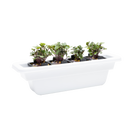
Rise Gardens' Personal Garden — a compact countertop hydroponic garden — is ideal if you are growing for a household of two to four people. It keeps a continuous rotation of culinary herbs within arm's reach of your stove year-round.
Setting Up Your Indoor Garden Herb Recipe Station
Before you even think about the lamb, you need a thriving herb garden. Hydroponics, at its core, is a method of growing plants in a nutrient-rich water solution rather than soil. Plants receive macro and micronutrients — nitrogen, phosphorus, potassium, calcium, magnesium, and trace elements — dissolved directly in water, which means roots absorb what they need without expending energy searching through soil. The result is faster, more consistent growth.
NASA's Veggie project, which has been researching plant growth in controlled environments since the early 2000s, confirmed that leafy plants and herbs grown under optimized LED spectra in hydroponic systems can reach harvest size 25–50% faster than soil-grown equivalents. That science translates directly to your kitchen garden: you get usable rosemary and thyme weeks earlier, and you harvest more frequently.
For this recipe, you will want at least four to six established herb plants:
- Rosemary — the backbone of any lamb preparation; piney, resinous, and assertive
- Thyme — earthy and slightly floral; pairs with rosemary without competing
- Flat-leaf parsley — brightens the butter and adds color to the finished crust
- Chives — optional, but adds a mild allium note that complements garlic beautifully
Rise Gardens offers a full selection of culinary herb seed pods designed specifically for their hydroponic systems, with pre-seeded plugs that germinate in days rather than weeks. If you want to scale your herb production — say, for entertaining regularly — the The Rise Garden 3 is a full-size indoor hydroponic garden system with three growing levels, giving you the capacity to keep rosemary, thyme, parsley, basil, chives, and mint all in simultaneous production without ever competing for space.
Maintain your garden at a water pH between 5.5 and 6.5 — this is the range at which herb plants absorb nutrients most efficiently. Use a dedicated hydroponic nutrients formula rather than all-purpose fertilizer; hydroponic nutrients are precisely calibrated to deliver the correct electrical conductivity (EC) for each growth stage, which prevents both deficiency and toxicity.
How Do You Make Herb Compound Butter for Rack of Lamb?
Compound butter sounds technical, but the process is genuinely simple. You are blending flavoring agents into room-temperature butter, rolling it into a log, chilling it, and then slicing rounds to use as a coating or finishing element. For this application, you will press the softened compound butter directly onto the lamb before roasting, creating a self-basting herb crust.
Compound Butter Ingredients
- 8 tablespoons (1 stick / 113g) unsalted butter, at room temperature
- 2 tablespoons fresh rosemary leaves, finely minced (from your hydroponic garden)
- 1 tablespoon fresh thyme leaves, stripped from stems
- 2 tablespoons flat-leaf parsley, finely chopped
- 1 tablespoon fresh chives, thinly sliced (optional)
- 3 cloves garlic, pressed or very finely minced
- 1 teaspoon lemon zest
- 1 teaspoon flaky sea salt
- ½ teaspoon freshly cracked black pepper
- 1 teaspoon Dijon mustard (acts as an emulsifier and adds depth)
Method
Place the softened butter in a bowl. Add all remaining ingredients and use a fork or rubber spatula to work everything together until fully combined and uniformly green-flecked. Taste and adjust salt. Lay a sheet of plastic wrap on your counter, spoon the butter onto the wrap, and roll it into a tight cylinder about 1.5 inches in diameter. Twist the ends to seal. Refrigerate for at least one hour, or freeze for up to three months. This is the compound butter you will use to coat the rack of lamb — and any leftovers are extraordinary on grilled bread, roasted vegetables, or steamed fish.
Indoor Garden Herb Compound Butter Roasted Rack of Lamb: The Complete Recipe
This recipe serves two to three people as a main course. A standard French-trimmed rack of lamb contains seven to eight ribs and weighs approximately 1.5 pounds. Internal temperature is your most reliable guide: 125°F (52°C) for rare, 130–135°F (54–57°C) for medium-rare, and 140°F (60°C) for medium. The USDA recommends a minimum internal temperature of 145°F (63°C) for lamb, followed by a three-minute rest.
Ingredients
- 1 French-trimmed rack of lamb (7–8 ribs, approximately 1.5 lbs)
- 1 full batch of herb compound butter (recipe above), divided
- 2 teaspoons neutral oil (avocado or grapeseed)
- Kosher salt and black pepper for seasoning
- 2 tablespoons plain breadcrumbs or panko (optional, for a more textured crust)
Instructions
- Dry brine the lamb (recommended, 4–24 hours ahead): Pat the rack completely dry with paper towels. Season generously all over with kosher salt — approximately 1 teaspoon per pound. Place uncovered on a wire rack set over a sheet pan and refrigerate. This draws moisture to the surface, which then reabsorbs into the meat, seasoning it deeply and improving the sear.
- Bring to room temperature: Remove the lamb from the refrigerator 45 minutes before cooking. Cold lamb dropped into a hot pan drops the pan temperature dramatically and results in uneven cooking.
- Preheat your oven to 425°F (220°C).
- Sear the lamb: Heat a cast-iron or stainless skillet over high heat until smoking. Add neutral oil. Season the lamb with a pinch of black pepper. Sear the fat cap side for 2–3 minutes until deeply golden. Turn and sear the meaty side for 1 minute. Remove from heat.
- Apply the compound butter: Slice 4–5 rounds of compound butter (approximately half the log) and press them firmly onto the fat cap and meaty surfaces of the rack. If using breadcrumbs, press them lightly into the butter layer at this stage for added texture. The butter will begin to soften from the heat of the sear — this is exactly what you want.
- Roast: Transfer the rack, bone-side down, to the oven. Roast for 12–16 minutes, checking internal temperature at the 12-minute mark. Pull the rack at 5°F below your target temperature — carryover cooking will close the gap during resting.
- Rest: Transfer to a cutting board and tent loosely with foil. Rest for 8–10 minutes. Do not skip this step; resting allows muscle fibers to relax and juices to redistribute.
- Carve and serve: Slice between each bone into individual chops. The cut surface should reveal a rosy interior rimmed by a vivid green herb crust. Serve immediately with a final pinch of flaky salt and any pan drippings spooned over the top.
What Herbs Grow Best Hydroponically for Homegrown Herb Roasted Lamb Chops?
Not every herb behaves identically in a hydroponic system, and knowing which ones thrive will help you plan a garden specifically optimized for savory roasting recipes. For homegrown herb roasted lamb chops, the following are the most reliable performers in an indoor hydroponic setup:
- Rosemary: Slower to establish than other herbs — expect 4–6 weeks from seed to first harvest — but once rooted, it is prolific. It prefers slightly lower humidity and strong light. The high resinous oil content that makes rosemary so effective with lamb is actually enhanced under consistent LED lighting.
- Thyme: One of the fastest-growing woody herbs in hydroponics. Ready for first light harvest in as little as 3–4 weeks. Thyme is also one of the most studied culinary herbs for its antimicrobial properties; research published in the Journal of Applied Microbiology identified thymol as an effective antimicrobial compound at concentrations naturally present in the plant.
- Flat-leaf parsley: Germinates slowly (10–14 days) but grows densely and can be harvested continuously by cutting outer stems. Parsley is high in chlorophyll, which gives compound butter its characteristic green color and contributes a clean, fresh finish.
- Mint: Grows aggressively in hydroponics — give it its own pod or it will encroach on neighbors. A tablespoon of fresh mint in the compound butter is a classic Mediterranean lamb pairing worth trying.
- Oregano: Compact and fragrant, oregano is underused in lamb preparations. Its slightly peppery bite balances the richness of butter and fat beautifully.
If you want furniture-grade design alongside serious growing capacity, The Rise Loft is a premium indoor garden built to live in your living or dining space while producing a full rotation of culinary herbs year-round. It is particularly well-suited to households where cooking and entertaining happen frequently.
Serving Suggestions and Make-Ahead Tips
Rack of lamb is naturally a special-occasion protein, and the compound butter component actually makes it one of the most practical dinner party dishes you can prepare, because the most time-intensive element — the butter — is made days ahead.
The compound butter log keeps in the refrigerator for up to two weeks and in the freezer for three months. Slice off rounds as needed. Beyond lamb, this indoor garden herb recipe butter works on: seared scallops, roasted chicken thighs, grilled ribeye, steamed clams, and baguette slices set under the broiler for 90 seconds.
For plating, classic accompaniments include white bean purée, roasted asparagus, or a simple arugula salad dressed with lemon and olive oil. A red wine pan sauce made from the drippings, a splash of red wine, and a knob of the remaining compound butter stirred in at the end elevates the dish further without requiring additional prep time.
Leftover lamb chops — if there are any — are exceptional cold the next day, sliced thin and eaten with good mustard and bread. The herb butter crust holds up well under refrigeration and remains flavorful for up to 48 hours.
Frequently Asked Questions
Can I use dried herbs instead of fresh for this compound butter?
You can, but the result will be noticeably different. Dried herbs have lost most of their volatile aromatic oils and can introduce a slightly dusty, muted flavor rather than the bright, vivid herbaceousness that makes this dish exceptional. If you must substitute, use one-third the quantity called for — dried herbs are more concentrated by weight — and add them at least 30 minutes before applying to let them rehydrate slightly in the butter. Fresh herbs from a hydroponic garden are strongly preferred here because the harvest-to-plate time is so short that aromatic oil content is at its peak.
How long does it take to grow enough rosemary and thyme hydroponically for this recipe?
Thyme is typically ready for a light first harvest in 3–4 weeks from a seed pod in a well-maintained hydroponic system. Rosemary takes longer — usually 5–7 weeks before the plant is established enough to harvest without stressing it. Planning ahead is key: start your herb pods at least six weeks before your intended cooking date to ensure you have a full, lush plant to draw from. Once established, both herbs regrow quickly after harvesting, so they become a permanent fixture in your indoor garden rotation.
What internal temperature should rack of lamb reach?
The USDA recommends cooking lamb to a minimum internal temperature of 145°F (63°C), followed by a three-minute rest period. Most culinary professionals and experienced home cooks prefer rack of lamb served at medium-rare, which is 130–135°F (54–57°C) at the center — pulling the rack from the oven at 128–130°F and allowing carryover cooking during a 10-minute rest to finish the job. Use an instant-read thermometer inserted into the thickest part of the meat, away from the bone, for an accurate reading.
What is the difference between hydroponics and soil growing for culinary herbs?
Hydroponics delivers dissolved nutrients directly to plant roots in water, while soil growing relies on microbial activity to break organic matter into plant-available nutrients over time. In a hydroponic system, plants skip the energy expenditure of extensive root searching and direct that energy into leaf and stem growth, which is why hydroponic herbs tend to grow 25–50% faster than soil equivalents under comparable conditions (per NASA Veggie project research). For culinary use, the practical advantage is consistent access to fresh herbs year-round, indoors, without seasonal limitations or soil-borne pest pressure. Plants grown hydroponically also benefit from a stable, controlled environment that eliminates the variability of outdoor weather, soil quality, and seasonal light changes — meaning you can harvest peak-flavor rosemary and thyme in the middle of winter just as reliably as in midsummer.